You just spent three hours filming and editing a video. The lighting was perfect, the value was packed, and the delivery was smooth. You post it, sit back, and watch the likes trickle in. But the comment section? Absolute silence. Just you and that one weird bot account offering crypto advice.
Jump to a section:
- How to Write Captions That Get Comments (The 60-Second Answer)
- The Passive Scroll: Why Generating Engagement is Getting Harder
- Strategy 1: Master the Curiosity Gap Hook
- Strategy 2: Engineering Low-Friction Micro-Commitments
- Strategy 3: Strategic Vulnerability and the 'Messy Middle'
- The 14-Day Comment Audit: How to Iteratively Improve Your Engagement
- Why Most People Still Don't Get Results: 5 Mistakes That Kill Your Reach
- From Manual Inspiration to Repeatable Engagement Systems
- Engagement FAQ: Common Questions About the Algorithm
- Final Summary: The Golden Rule of Social Conversation
Sound familiar?
We've all been there. The harsh truth about social media is that getting a like is cheap. It takes zero effort to double-tap. But getting someone to stop scrolling, open their keyboard, and actually type a response requires overcoming massive psychological friction. If you want to know how to write captions that get comments, you have to stop writing mini-blog posts and start engineering conversations.
How to Write Captions That Get Comments (The 60-Second Answer)
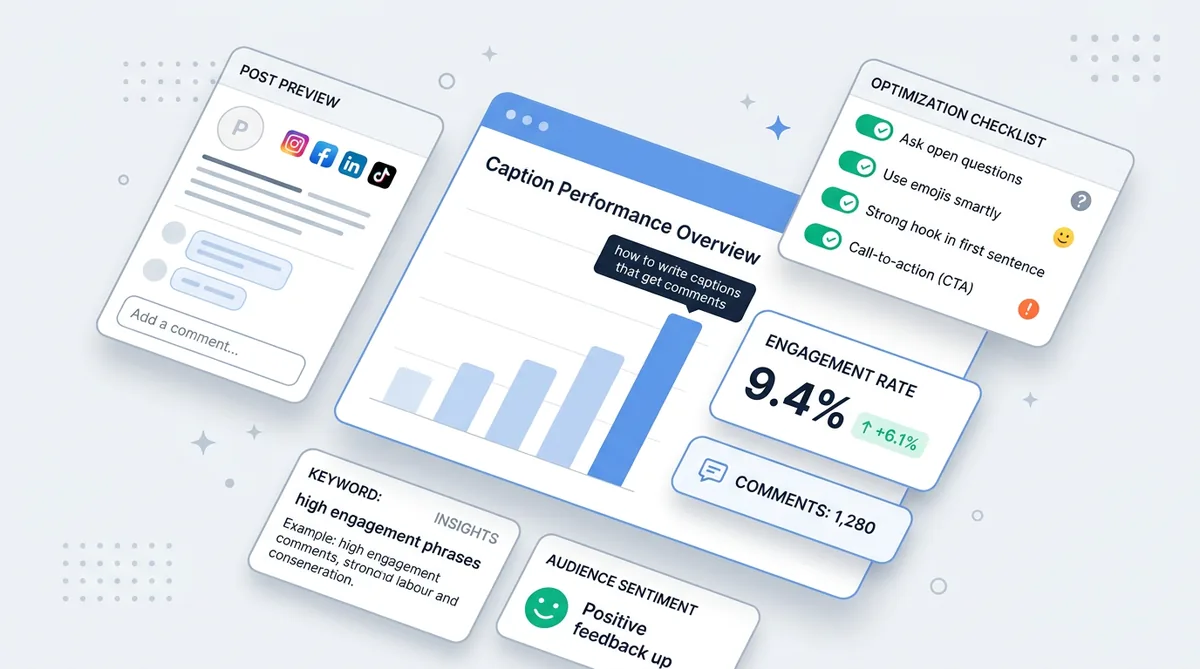
To learn how to write captions that get comments, you must combine a curiosity gap hook with a low-friction call to action. Stop asking broad, open-ended questions that require deep thought. Instead, give your audience easy, binary choices or ask for specific advice, making their contribution feel effortless and valued.
The Passive Scroll: Why Generating Engagement is Getting Harder
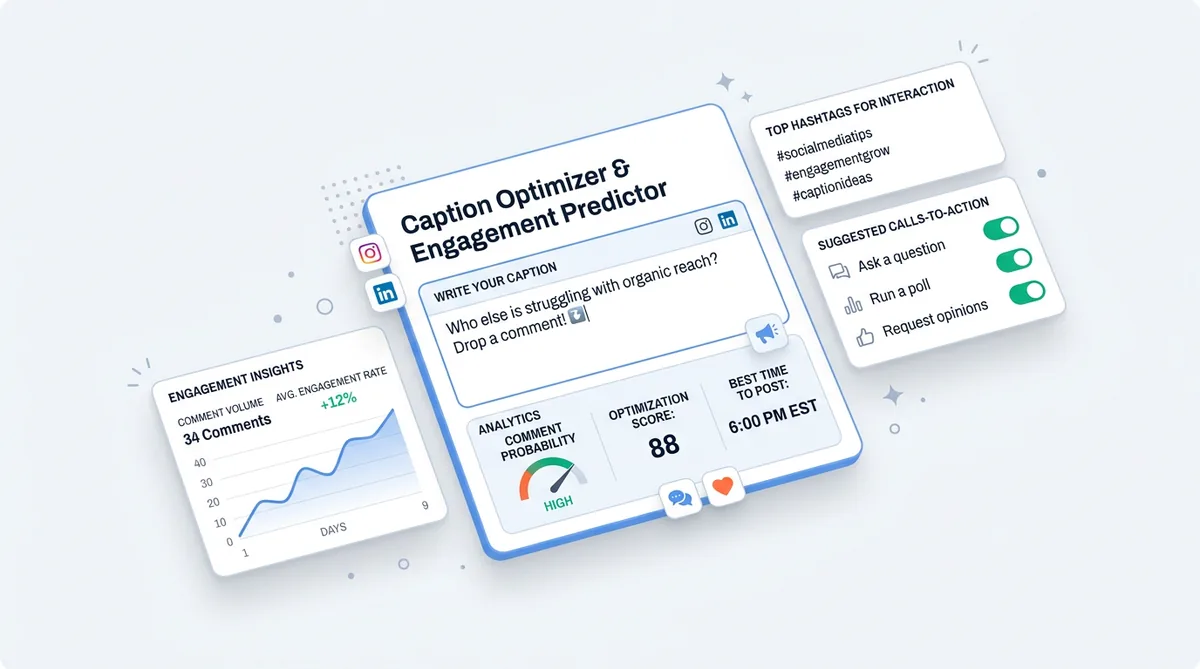
Look at your own behavior on Instagram or LinkedIn right now. You are likely in "zombie scroll" mode. You are looking for quick hits of dopamine, not a deep intellectual debate.
Most creators get this wrong. They treat their captions like diary entries or academic papers, ending with a generic "What do you think? Let me know below." That used to work in 2017. Today, platform fatigue is real. Users are consuming an endless stream of content, and the algorithms have shifted heavily toward passive consumption metrics like watch time and retention.
If you want people to talk, you need to understand the mechanism of a comment. A comment is a micro-investment. People only make that investment if they feel strongly validated, mildly outraged, or specifically needed.
Strategy 1: Master the Curiosity Gap Hook
A great comment section starts before the reader even reaches the end of your post. It starts with the hook. You need to trigger the "Open Loop" mechanism—a psychological urge to find closure that forces users to hit the "See More" button and engage with your text.
When you master social media hook formulas, you stop summarizing your video in the first line and start teasing the payoff. Instead of writing "Here is my morning routine," you write "The one morning habit that ruined my productivity for 3 years." The brain craves the missing information.
Triggering Dopamine with the 'I Can Relate' Statement
One of the easiest ways to get people talking is to lead with a shared, hyper-specific frustration. Make the reader think, "Finally, someone said it."
Imagine you are a B2B creator. Instead of posting "Communication is important for teams," post "There is nothing worse than a Friday at 4 PM Slack message that just says 'Hey, do you have a second?'" That specific scenario triggers an emotional response. People will rush to the comments to share their own horror stories because venting feels good.
Using Specific Numbers to Create Instant Authority
Specificity is the easiest way to signal value. "I tried 47 hooks" gets significantly more engagement than "I tried many hooks." Why? Specific numbers trigger the brain's pattern-recognition system. They feel scannable, grounded, and achievable.
When you use a weird, exact number, the algorithm reinforces it because specific numbers drive higher click-through rates. Broad claims feel vague and skippable. Exact numbers feel like empirical data. Try opening your next post with "The 3 exact templates I use..." instead of "Some templates..."
Strategy 2: Engineering Low-Friction Micro-Commitments
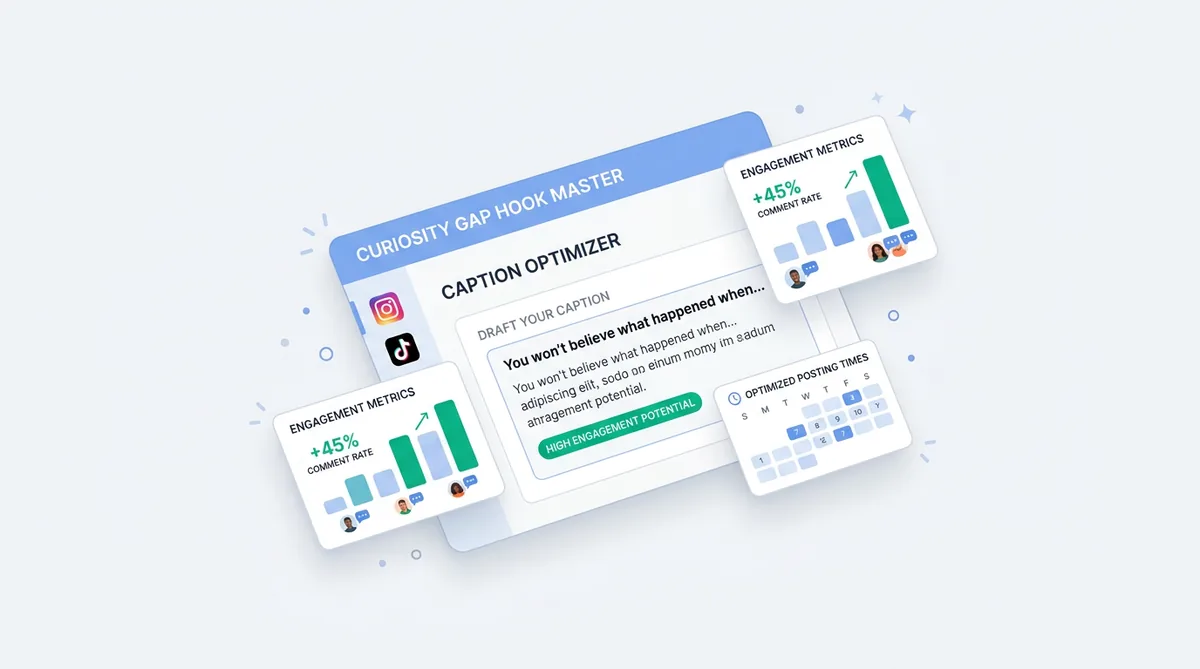
Here is where most captions fall apart. You write a brilliant story and then ask, "What are your goals for 2024?"
That is a massive cognitive load. Answering that question requires the reader to pause, reflect on their life, articulate a multi-layered thought, and type it out on a tiny glass keyboard. They will not do it. They will just keep scrolling.
If you want to master writing captions that get comments, you need to lower the barrier to entry. Every solid Instagram caption formula ends with a micro-commitment—a question so easy to answer that it feels like a quick win.
The Power of Binary and 'This vs. That' Choices
Binary choices require almost zero brain power. You are asking the reader to simply pick a side. "Coffee or tea?" "Morning workout or evening workout?" "Option A or Option B?"
These work because humans love tribalism and declaring their preferences. Once you get them to drop a one-word answer, you can reply to that comment and pivot the conversation deeper. You get the initial algorithm signal, and then you build the actual relationship in the replies.
The 'Advice Seekers' Method for High-Value Comments
People love giving advice. It makes them feel smart and valued. Instead of positioning yourself as the untouchable expert, ask your audience for a specific recommendation.
If you are traveling, ask "What is the one coffee shop I absolutely cannot miss in Austin?" If you are buying gear, post two microphone options and ask "Which one has better background noise cancellation?" The intent to help overrides the friction of typing.
Strategy 3: Strategic Vulnerability and the 'Messy Middle'
Nobody wants to engage with perfection. It is intimidating and boring. This brings us to the Pratfall Effect—a psychological phenomenon where showing a minor mistake or flaw actually makes a competent person appear more likable and approachable.
When you only post your wins, your audience becomes spectators. When you post your failures, your audience becomes a community.
Moving Beyond 'Perfect' to Build Authentic Connection
Share a loss. Talk about the client that fired you, the launch that flopped, or the video that took ten hours and got twelve views. Explain the mechanism of what went wrong and what you learned.
This lowers the pedestal. It gives other creators permission to admit their own struggles in your comment section. Just remember to maintain authority by framing it around the lesson learned, not just complaining into the void.
The 14-Day Comment Audit: How to Iteratively Improve Your Engagement
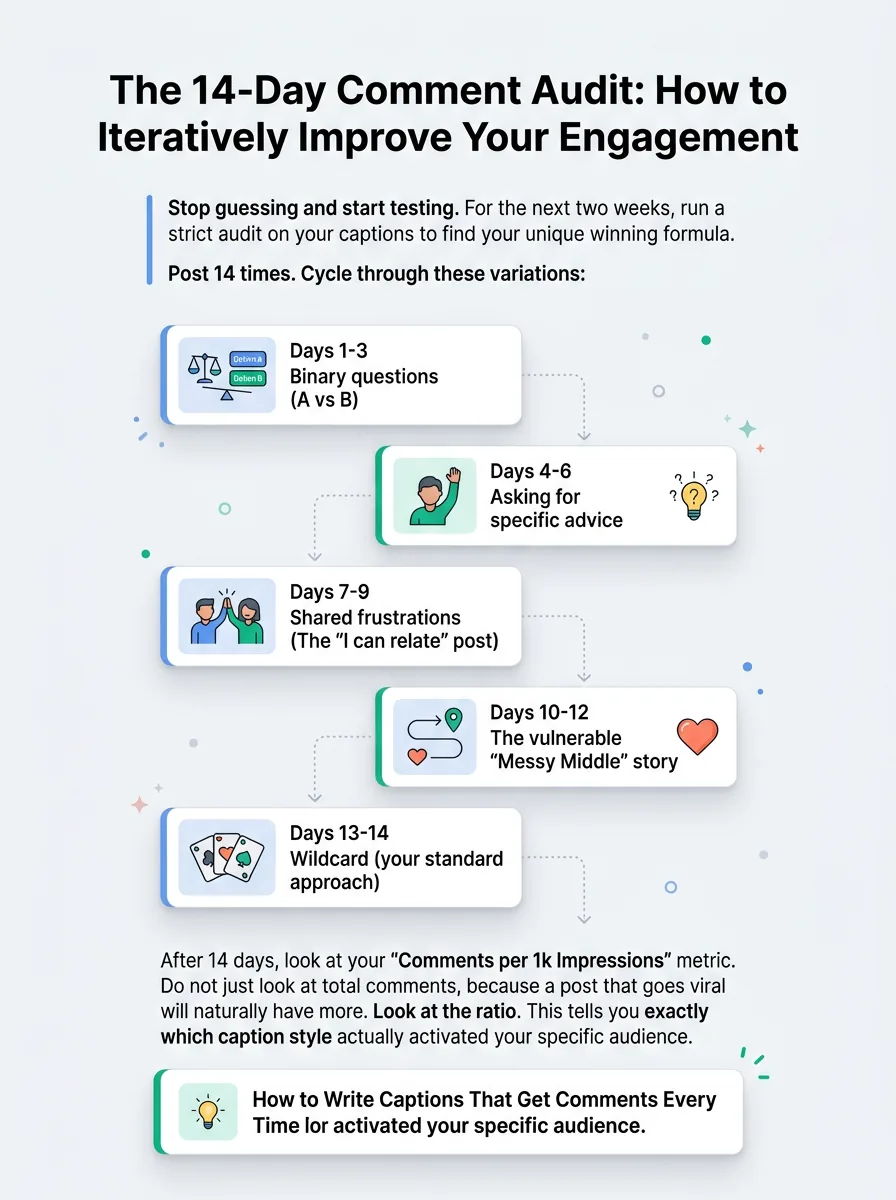
Stop guessing and start testing. For the next two weeks, run a strict audit on your captions to find your unique winning formula.
Post 14 times. Cycle through these variations:
Key takeaways at a glance
- Days 1-3
Binary questions (A vs B)
- Days 4-6
Asking for specific advice
- Days 7-9
Shared frustrations (The "I can relate" post)
- Days 10-12
The vulnerable "Messy Middle" story
- Days 13-14
Wildcard (your standard approach)
After 14 days, look at your "Comments per 1k Impressions" metric. Do not just look at total comments, because a post that goes viral will naturally have more. Look at the ratio. This tells you exactly which caption style actually activated your specific audience.
Why Most People Still Don't Get Results: 5 Mistakes That Kill Your Reach
Even with good strategies, creators unknowingly sabotage their own engagement. Here is what you are probably doing wrong.
- 1. Ghosting your own comment section.
If you post and then immediately close the app, you are killing your momentum. The algorithm watches the first 30 minutes closely. If someone comments and you reply instantly, you create a thread, doubling the comment count and signaling active discussion.
- 2. Asking "The Big Ask" too early.
Asking "What is your deepest fear?" to an audience of strangers is like proposing on a first date. Start small. Build up to the heavy questions.
- 3. Stacking three ideas in one opening line.
Confusion is the enemy of engagement. If your hook is "How I built my business, plus my morning routine, and a tip on taxes," the reader has no idea what the post is actually about. One post, one core idea.
- 4. Using overt engagement bait.
"Comment YES if you agree" is actively suppressed by algorithms today. Platforms use machine learning to detect and shadow-demote artificial engagement tactics. Make the conversation natural.
- 5. The "Wall of Text" formatting error.
You could write the most compelling question in the world, but if it is buried at the bottom of a 400-word paragraph with no line breaks, nobody will ever read it. People scan. Use white space.
From Manual Inspiration to Repeatable Engagement Systems
The real problem isn't knowing what a good caption looks like. It is producing enough quality variations consistently without spending an hour agonizing over every single post.
Writing one great caption with a curiosity hook and a low-friction CTA is easy. Doing it 30 times a month across four different platforms is a recipe for creative burnout.
That is why creators use a dedicated caption generator to do the heavy lifting. You just describe your post topic, pick your platform and tone (like "witty" or "professional"), and it outputs ready-to-use options complete with solid hooks, body copy, and low-friction CTAs. You produce multiple variations in seconds, choose the best one, tweak it to your personal voice, and hit publish.
Start creating viral content today
Join other creators who've transformed their social media presence with AI-powered content.
Start creating nowSystematizing your output means you spend less time staring at a blinking cursor and more time actually talking to the people in your comment section.
Engagement FAQ: Common Questions About the Algorithm
Do hashtags in the first comment still work?
No, the current data shows this is an outdated tactic. Platforms now prefer hashtags directly in the caption to categorize your content accurately for search and discovery.
Does editing a caption kill engagement?
Fixing a quick typo within the first few minutes will not hurt you. However, making major edits after a post has gained traction can trigger the algorithm to re-evaluate the post, which often slows down your reach.
Should I reply to every single comment?
Yes, especially in the first 24 hours. Every reply you make adds to the total comment count, which is a strong signal to the algorithm that the post is generating active community discussion.
Final Summary: The Golden Rule of Social Conversation
Engagement is always a two-way street. If you want people to talk to you, you have to write for their ego, their convenience, and their interests, not just your own.
Write Captions That Get Engagement
Generate scroll-stopping captions that drive likes, comments, and shares.
Try Caption GeneratorStop talking at your audience and start designing spaces for them to talk to each other. That is the only real secret to building a comment section that never sleeps.