Stop Talking into the Void: Why Your Posts Aren't Moving the Needle
Imagine you just spent an hour writing a post. You checked the spelling, tweaked the spacing, hit publish, and waited. An hour later, you have 12 likes. Most of them are from bots or your mom.
Jump to a section:
- Stop Talking into the Void: Why Your Posts Aren't Moving the Needle
- Quick Answer: Why Your Posts Get Low Engagement
- The Diagnosis: Identifying Your Engagement Killers
- Fix #1: Master the Art of the High-Stakes Hook
- Fix #2: Engineering Posts for Maximum Dwell Time
- 5 Critical Mistakes That Are Actively Killing Your Reach
- The Scaling Dilemma: From Manual Effort to Repeatable Success
- Frequently Asked Questions
- The Core Principle of Engagement
Sound familiar? It is the most common creator frustration right now.
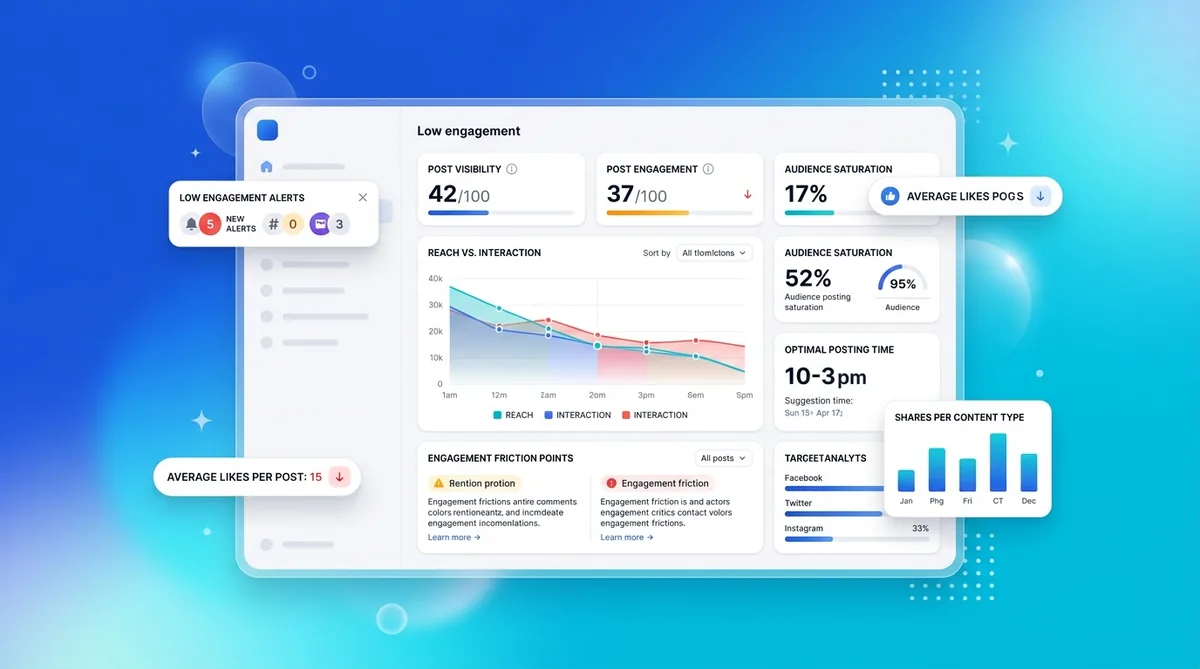
If you are constantly asking yourself why your posts get low engagement, you are probably blaming the algorithm. You think the platform is actively suppressing your reach. But what nobody tells you is that algorithms do not care about you enough to suppress you. They only care about keeping users on the app.
Quick Answer: Why Your Posts Get Low Engagement
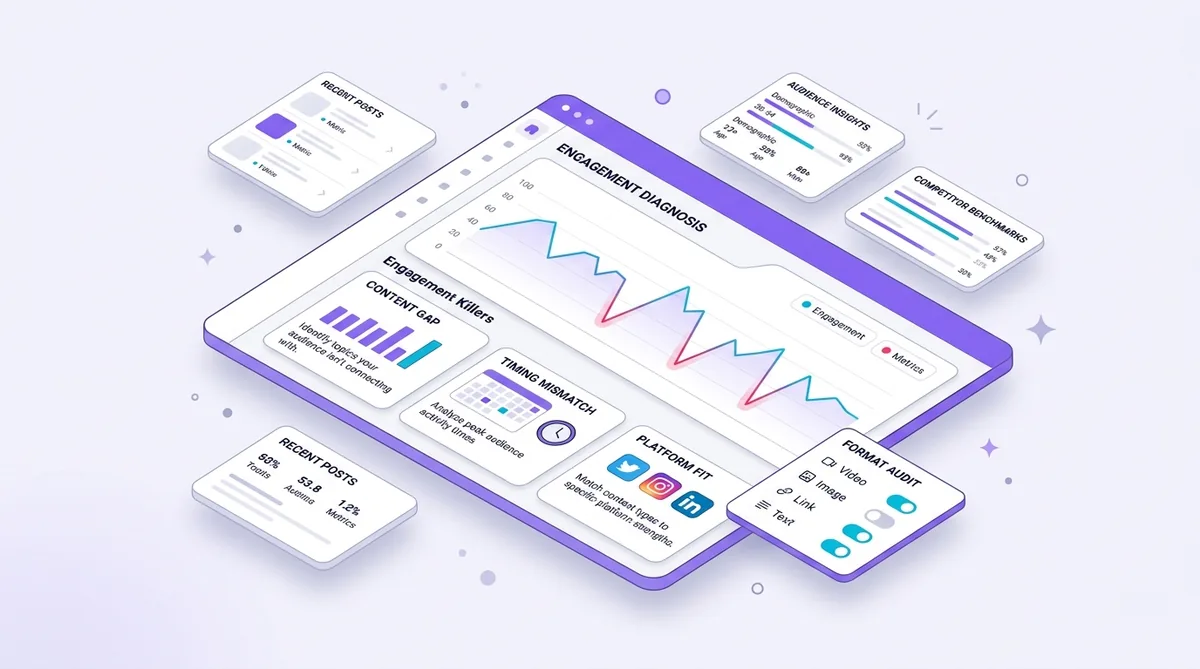
Your posts get low engagement because they lack a scroll-stopping hook and fail to provide immediate, platform-native value. The brain automatically filters out content that feels like effort to read. To fix this immediately, cut your introductory fluff, move the most controversial or interesting point to your very first line, and format the text for rapid scannability.
Engagement is a transaction. You are asking for a second of someone's time, and you have to pay for it with immediate value.
The Diagnosis: Identifying Your Engagement Killers
Most creators get this wrong. They think the solution to why your posts get low engagement is to just post more often. But amplifying a broken strategy just scales your failure.
The Self-Promotion Trap
Look at your last five posts. If they start with "I am so honored to announce" or "I just released," users are already scrolling past. People on social media are inherently selfish. They are scanning the feed looking for things that solve their problems, entertain them, or validate their worldview. When you make the post entirely about yourself, you create zero incentive for a stranger to stop.
Low Visual and Cognitive Flow
A massive wall of text is a cognitive stop sign. The human brain naturally conserves energy. When a user sees an unbroken block of text on a tiny mobile screen, their brain registers it as high effort and skips it. This is why formatting matters. If you are building a LinkedIn content strategy for a personal brand, spacing out your ideas is non-negotiable.
Fix #1: Master the Art of the High-Stakes Hook
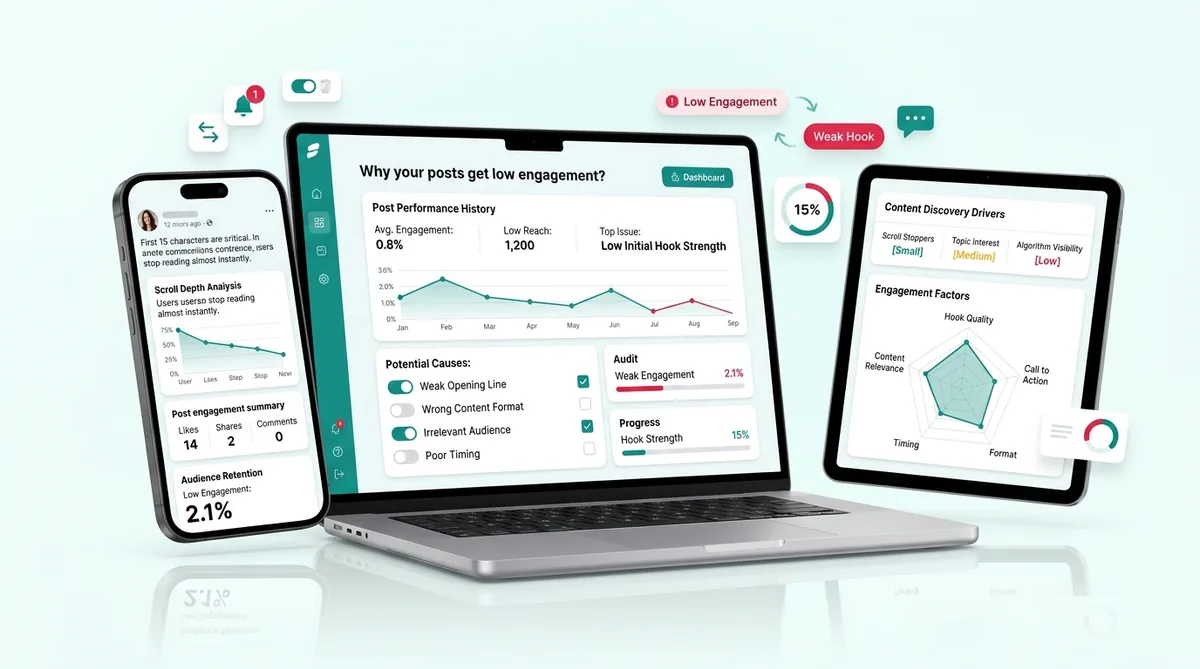
You have exactly three seconds to convince someone not to swipe away. The hook is everything.
Open a Curiosity Gap
A good hook creates tension. It teases a result without giving the whole game away. Specific numbers trigger the brain's pattern-recognition system. A hook like "How I grew my account" is vague and skippable. "The 3-step system that replaced my 9-to-5 income" creates a curiosity gap that can only be closed by reading further.
Use Negative Stakes to Create Urgency
Loss aversion is a heavily documented psychological trigger. People are generally more motivated by the fear of losing something than the prospect of gaining something equal. Pointing out a specific mistake your target audience is making drives significantly higher click-through rates. According to Instagram's official platform guidelines, content that immediately signals its relevance to the viewer is prioritized in the feed. The algorithm measures that initial attention and uses it to decide whether to show your post to the next tier of users.
Fix #2: Engineering Posts for Maximum Dwell Time
Algorithms across all platforms now heavily weigh dwell time. If a user stops and reads your entire post, the platform pushes it to more people. This is the core mechanism behind viral reach.
The One-Idea-Per-Post Rule
Complexity kills engagement. If you try to explain three different concepts in a single update, you dilute the message. The reader gets confused and leaves. Focus on one clear takeaway. For example, if you are figuring out how to repurpose a podcast into social media posts, do not try to summarize a 45-minute episode in one caption. Pull out one single mind-blowing quote and make the entire post about that specific idea.
Micro-CTAs That Lower the Barrier to Entry
Most creators ask for too much too soon. A heavy Call-To-Action like "Buy my course" or "Click the link in my bio to read a 2000-word article" requires high friction. Instead, use micro-CTAs that take zero effort. Ask people to drop a specific emoji in the comments if they agree, or ask them to choose between option A or B. This jumpstarts the comment section, which signals high engagement to the algorithm.
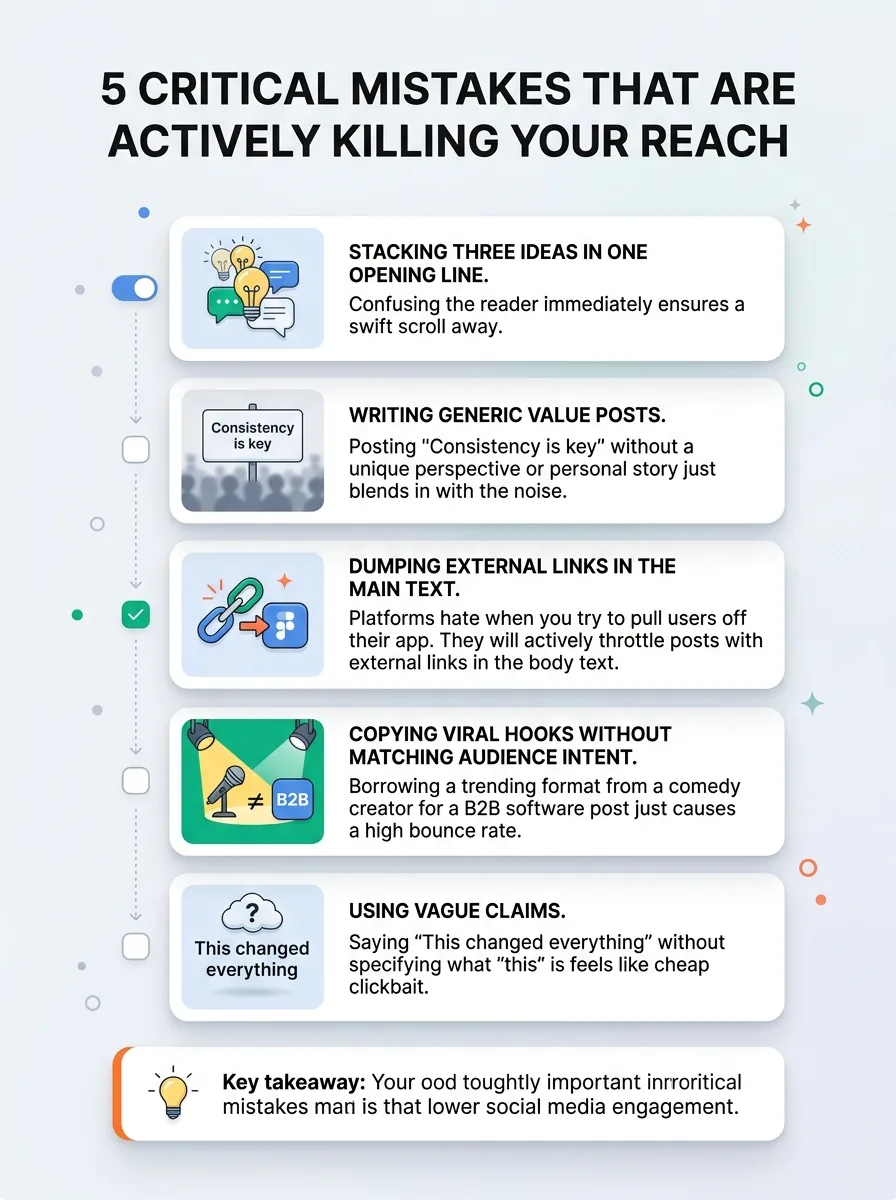
5 Critical Mistakes That Are Actively Killing Your Reach
If you want to know why your posts get low engagement, check yourself against these specific tactical errors.
- Stacking three ideas in one opening line.
Confusing the reader immediately ensures a swift scroll away.
- Writing generic value posts.
Posting "Consistency is key" without a unique perspective or personal story just blends in with the noise.
- Dumping external links in the main text.
Platforms hate when you try to pull users off their app. They will actively throttle posts with external links in the body text.
- Copying viral hooks without matching audience intent.
Borrowing a trending format from a comedy creator for a B2B software post just causes a high bounce rate.
- Using vague claims.
Saying "This changed everything" without specifying what "this" is feels like cheap clickbait.
The Scaling Dilemma: From Manual Effort to Repeatable Success
The real problem isn't knowing what a good post looks like. It is producing enough quality variations consistently without spending an hour on every single draft.
You might have a brilliant insight, but manually adapting it into a punchy Twitter thread, a visual carousel, and a professional LinkedIn update is exhausting. You eventually burn out and go back to posting generic filler.
That is why creators stop doing it all manually. A dedicated content generator transforms a raw, six-word thought into platform-ready scripts and threads, instantly adapting the tone for each network. You just drop your idea in, pick the platform, and get variations you can tweak and post immediately.
Start creating viral content today
Join other creators who've transformed their social media presence with AI-powered content.
Start creating nowConsistent, repeatable output is the only way to build a real feedback loop. You need volume to test what actually resonates with your audience.
Frequently Asked Questions
Does the time of day I post actually matter?
In practice, posting times matter much less than post quality. While posting when your audience is awake gives you a slight initial bump, algorithms serve high-retention content for days regardless of when it went live.
Should I be using more hashtags to fix low engagement?
Not even close. Hashtags are mainly used for categorization now, not distribution. Stuffing 30 hashtags at the bottom of a post looks spammy and rarely drives meaningful reach.
Does editing a post right after publishing kill its reach?
There is no evidence that fixing a typo in the first five minutes penalizes your post. However, fundamentally changing the content or removing tags can disrupt the initial algorithmic assessment.
Create 10x More Content
Transform one idea into dozens of engaging posts for every platform.
Try Content GeneratorThe Core Principle of Engagement
Engagement is a transaction of value, never a demand for attention. Stop asking why your posts get low engagement, and start asking what your reader gets out of the exchange. Fix the hook, respect their time, and the algorithm will follow.